The Creative Cycle: A living pattern that connects human life and the more-than-human world
Human and Ecological Cycles Through the Five Elements
The Creative Cycle is a cyclical pattern that underpins how life unfolds—within human experience and far beyond it. It describes how ideas, actions, relationships, and ecosystems come into being, take form, mature, dissolve, and return to potential. Rooted in Traditional Chinese Medicine (TCM) and Daoist philosophy ((often known as the Creation Cycle or Birth Cycle), the Creative Cycle mirrors the Five Elements—Water, Wood, Fire, Earth, and Metal—not as static substances, but as dynamic phases of movement and transformation.
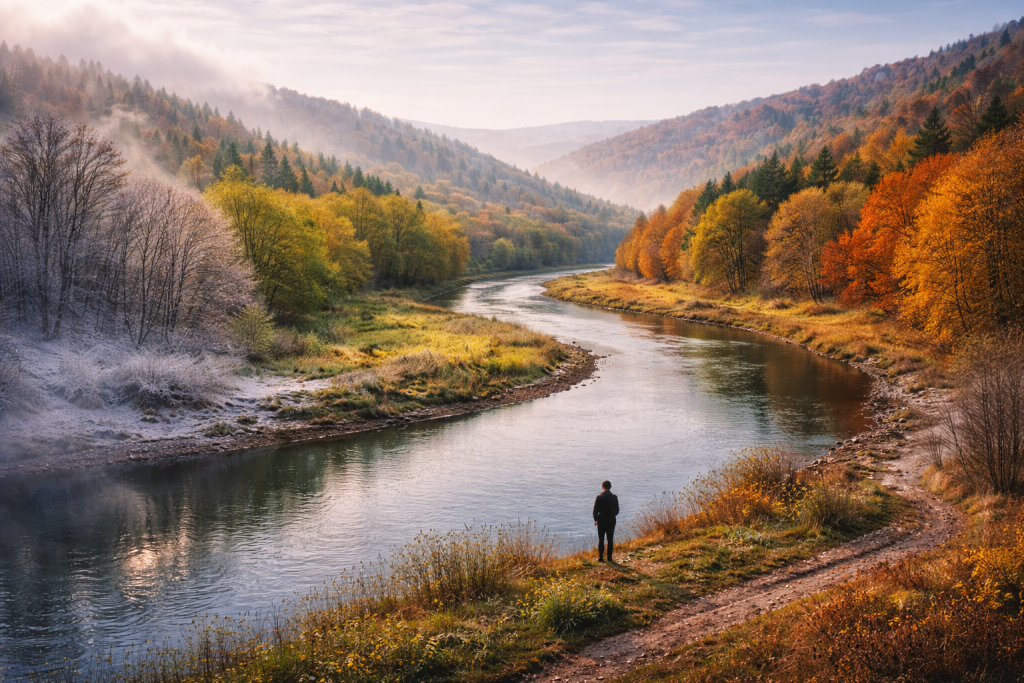
This framework invites a shift away from linear, human-centred thinking toward an understanding of ourselves as microcosms within a living macrocosm. In TCM, humans are not separate from nature, nor positioned above it. We are participants within the same cyclical intelligence that governs the more-than-human world. The rhythms that govern rivers, tides, growth, decay, and return also govern our nervous systems, our emotional cycles, our creative processes and our life transitions.
Seen this way, creativity is not something humans “do” on top of the world. It is something we participate in, as part of the same living system.
When we fall out of sync with these rhythms, we experience friction: anxiety, burnout, creative block, over-efforting, or collapse. When we return into resonance, creativity becomes less about force and more about listening, timing, and response. The Creative Cycle helps reframe growth and change not as something to be forced, but as something to be listened to, timed, and accompanied. When we work with the cycle rather than against it, effort softens and coherence increases—both internally and externally.
This perspective is especially relevant in a time marked by burnout, extraction, and urgency. The Creative Cycle offers an alternative: attunement instead of acceleration.
The Five Elements of the Creative Cycle: living phases, not stages
The Five Elements — Water, Wood, Fire, Earth, and Metal — describe phases within an ongoing cycle. They are not hierarchical, linear, or fixed. Each phase holds equal importance, and each arises in relation to the others. Rather than a linear sequence with a single beginning, the Creative Cycle is a continuous spiral — a continual movement of emergence, expression, integration, and return.
Water — Potential and Listening
Water represents the phase of non-form: stillness, depth, and receptivity — the fertile ground of not-knowing. It is the moment before something takes shape—the quiet sensing of an impulse, a question, or a call. In human experience, this may feel like a vague pull, a curiosity, or a subtle knowing that something is asking to emerge. In ecological terms, it mirrors winter, underground movement, and the gestation of life beneath the surface.
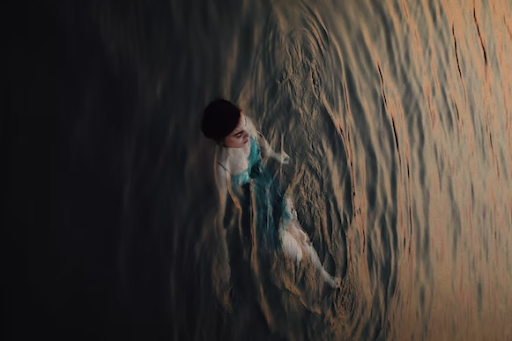
When Water is constructive, there is space for listening and imagination. When distorted, it can slip into withdrawal, confusion, or avoidance.
Virtue: Receptivity
Verb: Sensing
Wood — Direction and Alignment
Wood marks the movement from potential toward direction. It is the phase of growth, orientation, and reaching toward possibility—like a sprout bending toward light. Here, form begins to organise itself. In human terms, this is where clarity slowly gathers and inner alignment develops. In ecosystems, it corresponds to spring, upward movement, and expansion.
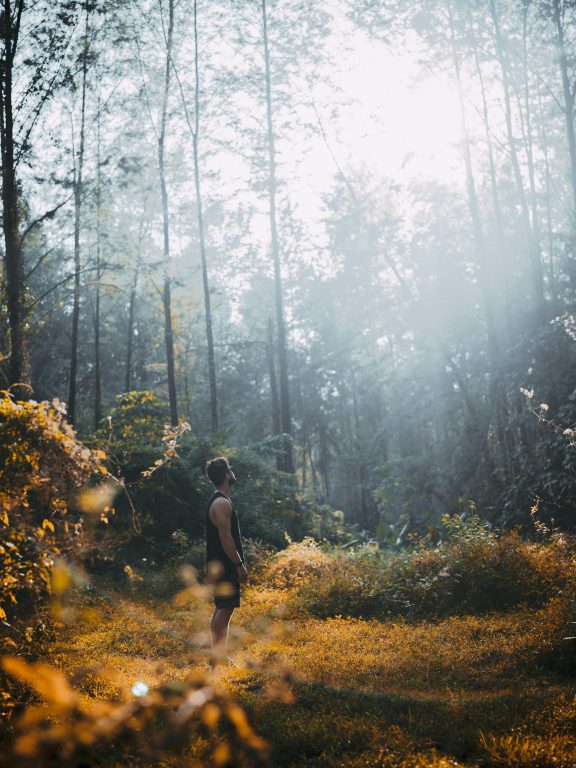
When Wood is constructive, growth is flexible and responsive. When distorted, it can become rushed, rigid, or driven by pressure rather than readiness.
Virtue: Trust
Verb: Aligning
Fire — Expression and Activation
Fire is the phase of visibility, expression, and engagement. Energy moves outward and becomes perceptible. In human life, this may show up as communication, creation, or decisive action. Ecologically, it mirrors summer, warmth, flowering, and peak activity.
Constructive Fire feels alive, timely, and energising. When out of balance, it becomes urgency, overexertion, or performative action disconnected from deeper rhythm.
Virtue: Vitality
Verb: Expressing
Earth — Integration and Embodiment
Earth is the phase of nourishment, digestion, and stabilisation. What has been expressed is now integrated and embodied. This phase is often overlooked in modern culture, yet it is essential. Earth corresponds to harvest, late summer, and the capacity to receive and sustain what has grown.
When Earth is constructive, there is a sense of enoughness and grounded presence. When distorted, it can become stagnation, over-holding, or depletion through over-giving.
Virtue: Sufficiency
Verb: Receiving
Metal — Discernment and Release
Metal is the phase of refinement, clarity, and letting go, making space for what comes next. It governs boundaries, endings, and the ability to distinguish what belongs and what does not. In human experience, Metal allows insight and discernment. In nature, it aligns with autumn, contraction, and return.
Constructive Metal brings clean endings and ethical clarity. When distorted, it becomes harsh self-criticism, perfectionism, or rigidity.
Virtue: Discernment
Verb: Refining
From Metal, the cycle naturally returns to Water—now informed by experience, not emptied by it. No element is “first.” No phase is superior. Just as Metal births Water, Water births Wood. Here you can find a comprehensive table of the Five Element Relationships.
Creativity as a relational, ecological process
In contemporary culture, creativity is often framed as output: productivity, visibility, execution. The Creative Cycle offers a different orientation. It reminds us that creation happens through relationship — with our bodies, with time, with place, with others, and with the more-than-human world. Trying to remain permanently in motion, expression, or growth ignores the necessity of rest, composting, and return.
This is why so many people feel exhausted rather than fulfilled by their creative lives.
Working with the Creative Cycle invites a shift:
from pushing → to listening
from forcing → to sensing
from extraction → to participation
When the Creative Cycle Is Disrupted
Difficulties in life often arise not because something is “wrong,” but because a phase of the cycle is skipped, rushed, or resisted. Burnout, anxiety, creative blocks, ecological harm, and relational breakdowns can all be understood as misalignment with cyclical timing—acting too soon, holding too long, or failing to listen when listening is required.
The Creative Cycle offers a way to diagnose and restore coherence without blame. Resonance returns not through willpower, but through attunement.
The Creative Cycle as a Practice of Listening
At its core, the Creative Cycle is a practice of embodied listening, in particular, listening with, rather than listening to:
listening with the body
listening with timing
listening with place
listening with what is emerging rather than imposing what should be
This understanding underpins my work in embodied coaching, embodied listening, and ecological inquiry. Across contexts, the invitation is the same: to participate with life rather than attempt to control it, just as one would to have agency with rather than agency over something or someone.
Why the Creative Cycle matters now
We live in a time shaped by acceleration, extraction, and linear thinking — not only in our economies, but in our inner lives.
The Creative Cycle offers a way to remember:
that rest is not collapse
that pauses are productive
that endings are not failures
that listening is a form of intelligence
It reconnects human creativity to ecological wisdom, reminding us that sustainable creation — in life, work, and relationship — depends on honoring cycles rather than overriding them.
Restoring Resonance Through Embodied Listening and Creative Cycle Embodied Coaching
When we feel out of sync, depleted, or disconnected, it is often because resonance has been disrupted. Restoring balance does not require force or optimisation. It begins with listening. Through embodied listening and embodied coaching, I support women in creative emergence and life transition to sense where flow has been interrupted — and to re-enter the cycle with greater trust, clarity, and care.
If you are curious about how the Creative Cycle can support your own creative, personal, or professional transitions, I invite you to explore:
Embodied Coaching → one-on-one accompaniment through cycles of change
Embodied listening → listening as relational, somatic, and ecological practice
The creative cycle will support you to remember and align with how life and the more-than-human world already moves.
Tune in to these Podcasts about the Creative Cycle:
Other application of the Creative Cycle: Women’s Creative Cycle, Menstrual Cycle, Product Cycle
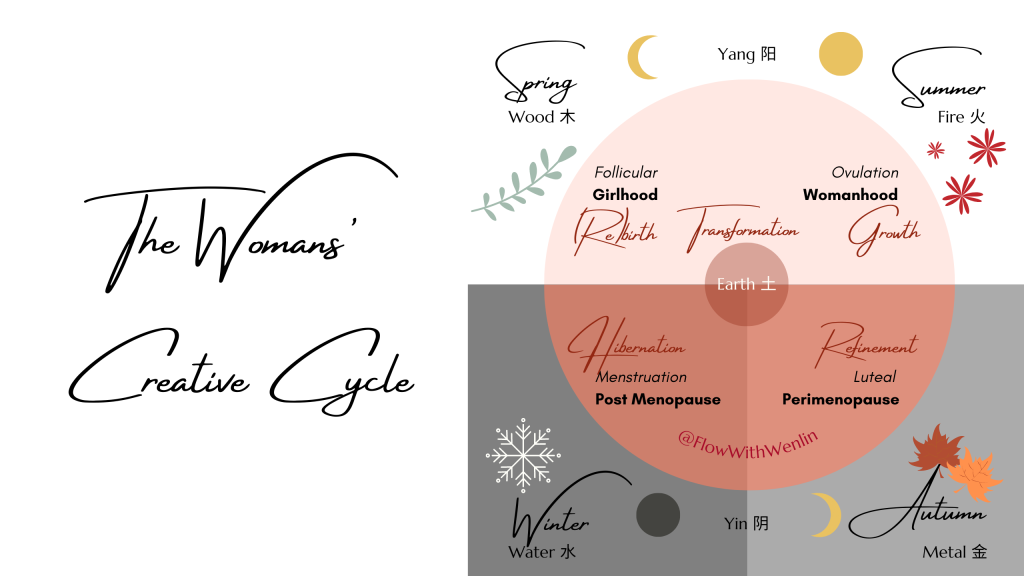
Aligning with your Menstrual Cycle: Cycle Syncing
By aligning your career milestones and personal life with your internal cycles (menstrual cycle) and external cycles of nature, you can save energy, time and effort and maximize outcomes, success and abundance in your life. By flowing with the cycles, work, life becomes easy. A key way to maximize your energy and effectiveness is to align your physical routine and diet according to your menstrual cycle. Discover how to harness the power of your menstrual cycle and listen to the podcast episodes below:
Yoga for the Menstrual Cycle
The Creative Cycle, Product Cycle and the Five Elements


This Post Has 0 Comments